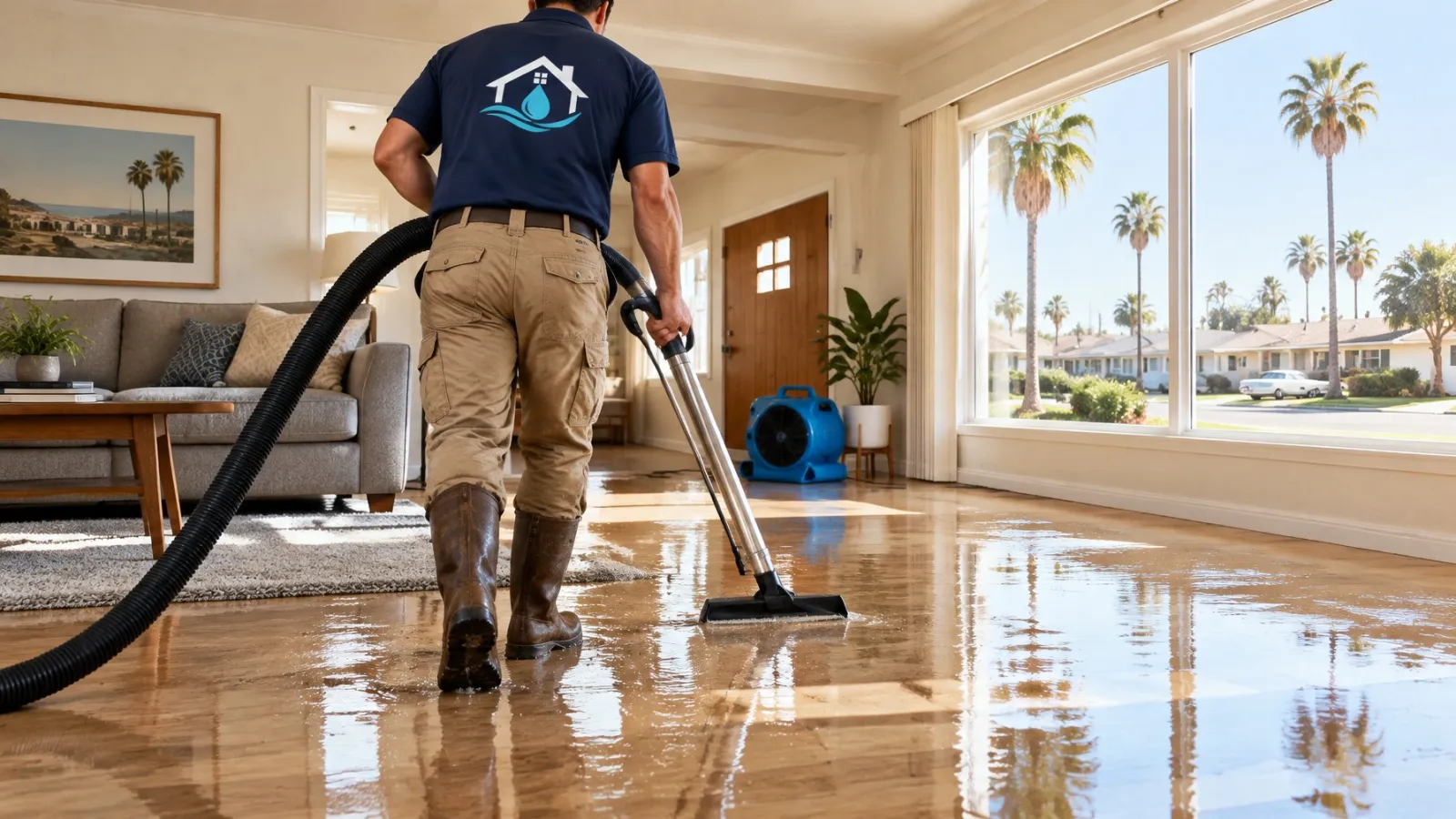
Water removal and structural drying
Water Damage Restoration in Pembroke Pines, FL
Wet drywall, swollen laminate or carpet that squelches? Call and you are connected with an independent restoration company that serves Pembroke Pines and nearby Broward cities.
- Free to use, no obligation
- Independent local contractors
- Homes, condos, rentals and businesses
In this climate, wet doesn't dry on its own
A South Florida house holds water. Drywall on concrete block, carpet pad on a slab, laminate over a vapor barrier: the water gets in easily and the humidity outside gives it no reason to leave. A leak that stopped on Tuesday is still soaking the bottom of the wall on Friday, and that is where swelling, odor and mold begin.
Restoration starts with three questions: where did the water come from, which rooms did it reach, and what are the materials made of. A good contractor tells clean water from contaminated, measures how far it has travelled with meters rather than by eye, pulls out the standing water, dries the structure and spells out what has to be replaced.
Right now
What to do first
- Stop the water at the fixture valve or the main shutoff, usually at the front of the house near the hose bib, if you can reach it safely.
- Switch off power to wet rooms at the breaker panel only if you can get there without standing in water.
- Photograph and film everything wet before anything is moved. Your insurer will ask for it.
- Lift rugs, furniture and electronics off wet floors. Foil or blocks under furniture legs stop stains.
- Leave the air conditioning running. It is the best dehumidifier you own until the drying equipment arrives.
What the restoration work covers
What a restoration contractor should do, so you know what to expect and what to ask.
Assessment and moisture mapping
The contractor finds the source, works out when it started and which rooms are involved, then meters the walls and floors to map how far the water has spread.
Standing water extraction
Pumps and wand extractors remove free water so the materials have less to give up later. It is the opening move, not the whole job.
Structural drying
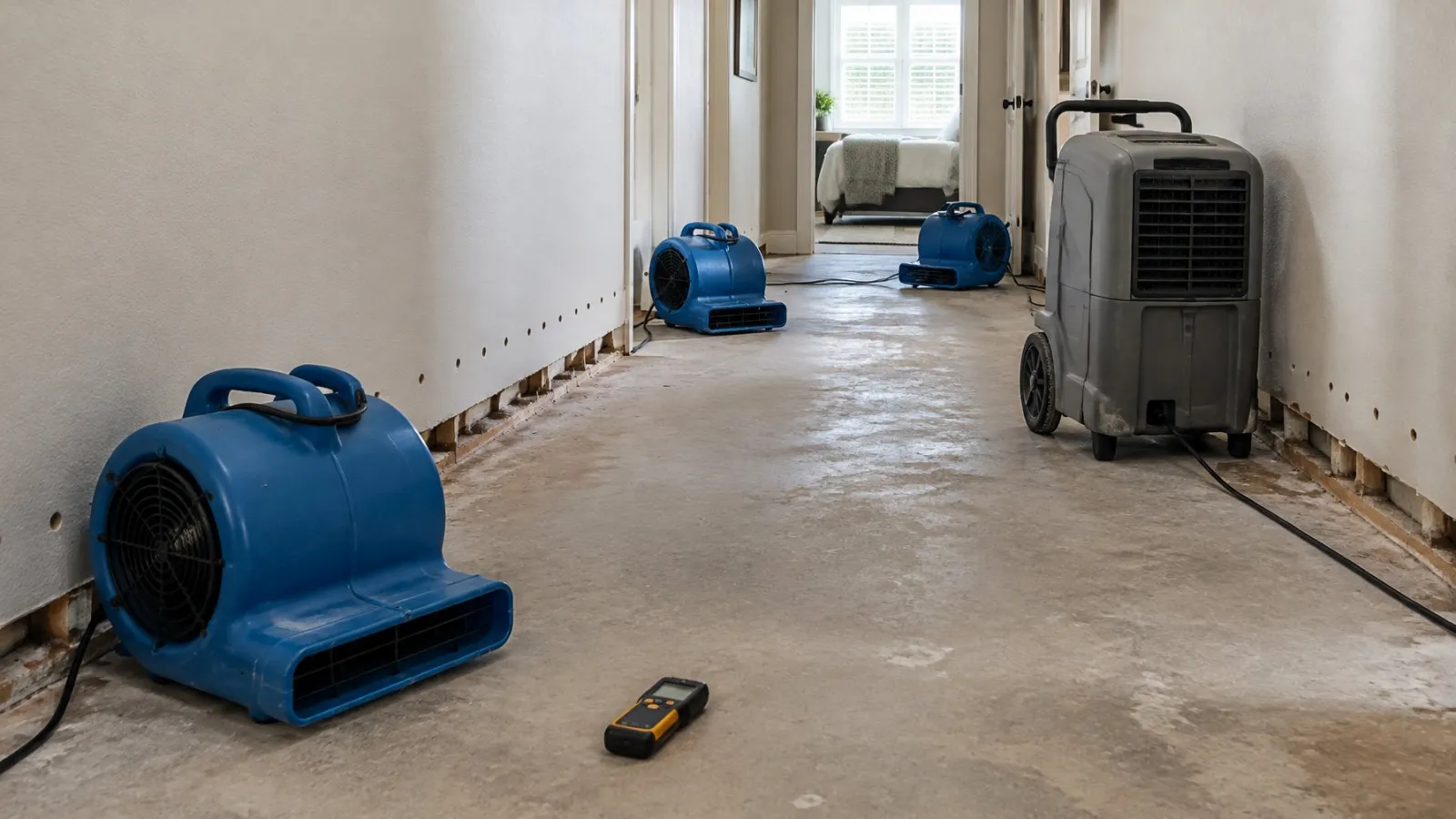
Air movers and dehumidifiers dry drywall, block walls, subfloor and framing. Run time depends on the materials, the indoor humidity and how wet things are.
Flooring and wall decisions
Carpet pad holds water, laminate and engineered wood swell, soaked drywall loses strength. Some materials dry in place; others come out.
Monitoring and documentation
Readings are logged until the materials reach a dry standard. Photos and notes let you follow progress and back up the insurance claim.
Repair planning
Drying is mitigation. New drywall, flooring or cabinets are reconstruction, often quoted separately. Ask which is which before work begins.
How it works
From your call to a dry home
We don't run our own crews. When you call or send the form, we connect you with an independent local restoration company that serves your area. They inspect, give you the estimate and do the work.
- 1
Call or request a call back
Tell us what happened and where. We connect you with an independent restoration company that covers your address.
- 2
Inspection and estimate
The contractor inspects the damage, takes moisture readings and explains the scope and price before anything starts.
- 3
Extraction and drying
Water comes out, drying equipment goes in, and readings are checked until the structure is dry.
- 4
Review and repairs
You get a walk-through of what was done and what still needs rebuilding, by the same company or another trade.
Costs
What water damage restoration typically costs
| Job | Typical range | What moves the price |
|---|---|---|
| One room, clean water, extraction and drying | $1,200 – $3,500 | Floor type, how long the water sat, whether drywall is cut |
| Several rooms, mitigation | $3,000 – $8,000 | Square footage, equipment days, materials removed |
| Extensive drying and material removal | $5,000 – $12,000+ | Hidden water, contamination, access |
These are planning ranges for typical jobs, not quotes or surveyed local averages. The contractor prices your job after an inspection. Plumbing, roofing, AC repairs and rebuilding are usually extra.
Questions
Water Damage Restoration: common questions
How fast should water damage be dried in South Florida?
As soon as it is safe to start. Warm, humid conditions let mold take hold on wet drywall within a day or two, faster than in a dry climate. Early extraction usually means less has to be torn out.
Can wet drywall be saved?
Sometimes. Clean water caught early can often be dried in place with the wall opened only along the bottom. Drywall that has swollen, crumbled or been soaked by contaminated water generally has to be cut out.
How long does structural drying take?
Often three to five days for a typical clean-water loss. Tile over slab dries faster than hardwood, and anything that sat for days takes longer. Drying should end when the readings say dry, not on a fixed day.
Related
Other water damage help
Water Extraction
Standing water out fast, before it wicks into drywall, cabinets and the pad under the carpet.
Learn moreFlood & Storm Damage
Hurricane season and summer flooding. What to do when rain or floodwater gets into the house.
Learn moreRoof Leak Water Damage
A brown ring on the ceiling after a storm means water in the attic insulation above it. What to do and who to call.
Learn moreAlso serving nearby cities
Besides Pembroke Pines itself, calls are taken from these neighboring Broward County cities.
Water damage right now?
Talk to a restoration contractor today
Call and you are connected to an independent restoration contractor who serves Pembroke Pines, Hollywood, Cooper City and Davie. Or leave your number and they call you back.